What Is Half of 3/4 Cup? (Easy Conversions, Tables & Tips)
Halving recipes sounds simple until you hit a measurement like ¾ cup. What’s half of that — and how do you measure it if your measuring cups don’t include “⅜ cup”?
Let’s break it down step-by-step, with exact conversions in tablespoons, milliliters, fluid ounces, and grams — plus tips for measuring accurately every time.
Quick Answer — What is Half of 3/4 Cup
- Half of ¾ cup = ⅜ cup
- ⅜ cup = 6 tablespoons
- ⅜ cup = 3 fluid ounces
- ⅜ cup ≈ 88.7 milliliters (US customary cup)
- ⅜ cup ≈ 93.8 milliliters (metric cup)
If your measuring set doesn’t include a ⅜ cup, you can measure:
- ¼ cup + 2 tablespoons, or
- 6 tablespoons total
That’s it! For most home cooking, this simple trick keeps your recipes perfectly balanced.
Understanding Cups and Measurements
Before jumping into conversions, it helps to know that not all “cups” are the same around the world.
| Cup Type | Milliliters (1 cup) | Common In |
|---|---|---|
| US Customary Cup | 236.588 ml | United States (most recipes) |
| US Legal Cup | 240 ml | Nutrition labels (FDA standard) |
| Metric Cup | 250 ml | UK, Canada, Australia, New Zealand |
| Imperial Cup | 284 ml | Older UK recipes |
In this article, we use US customary cups (236.588 ml) unless otherwise noted, and provide metric equivalents for international readers.
Conversion Chart — Half of 3/4 Cup in Different Units
Here’s a quick reference table you can use for any recipe:
| Measurement | Equivalent |
|---|---|
| ¾ cup (original) | 12 tablespoons |
| ½ of ¾ cup | ⅜ cup (6 tablespoons) |
| Tablespoons | 6 tbsp |
| Fluid ounces | 3 fl oz |
| US ml (236.588 ml cup) | 88.7 ml |
| Metric ml (250 ml cup) | 93.8 ml |
Tip: When measuring liquids, use a clear liquid measuring jug and check at eye level for accuracy.
Half of 3/4 Cup in Tablespoons
There are 16 tablespoons in one cup.
So, to find half of ¾ cup:
- ¾ cup × 16 tbsp = 12 tbsp
- Half of 12 tbsp = 6 tbsp
Therefore:
Half of ¾ cup = 6 tablespoons
If you’re baking or cooking, this is usually the simplest conversion to work with — tablespoons are precise and easy to measure.
Half of 3/4 Cup in Milliliters
Because cups vary by region, here’s the breakdown for different cup standards:
| Cup Type | ¾ Cup (ml) | Half of ¾ Cup (ml) |
|---|---|---|
| US Customary (236.588 ml) | 177.44 ml | 88.72 ml |
| US Legal (240 ml) | 180 ml | 90 ml |
| Metric (250 ml) | 187.5 ml | 93.75 ml |
When in doubt, round to the nearest whole number for convenience: 89 ml (US) or 94 ml (metric).
Half of 3/4 Cup in Grams — By Ingredient
Because ¾ cup of flour doesn’t weigh the same as ¾ cup of sugar or butter, here’s a quick ingredient-specific table.
| Ingredient | ¾ Cup (grams) | Half of ¾ Cup (grams) |
|---|---|---|
| All-purpose flour (sifted) | 90 g | 45 g |
| All-purpose flour (scooped) | 100 g | 50 g |
| Granulated sugar | 150 g | 75 g |
| Brown sugar (packed) | 165 g | 82 g |
| Butter | 170 g | 85 g |
| Honey or syrup | 255 g | 128 g |
| Milk | 180 g | 90 g |
| Oats (rolled) | 70 g | 35 g |
| Cocoa powder | 75 g | 38 g |
Note: Grams can vary depending on humidity, packing, and brand. For baking precision, always weigh your ingredients with a kitchen scale.
How to Measure Half of 3/4 Cup Without a 3/8 Cup
Most measuring cup sets don’t include a ⅜-cup size, but there are several easy workarounds.
Option 1 — Use Tablespoons
Measure 6 level tablespoons — this works for both dry and liquid ingredients.
Option 2 — Combine Cups
Use:
- ¼ cup + 2 tablespoons, or
- 1/3 cup + 1 tablespoon (approx.)
Option 3 — Use a Measuring Jug
If your jug shows milliliters or ounces:
- Pour until about 89 ml (US) or 3 fluid ounces
Option 4 — Use a Kitchen Scale
If your recipe lists weight (grams), simply divide the total weight of ¾ cup by two (use the grams table above).
Option 5 — Estimate Visually
Fill a ¾ cup, then eyeball half of it. This method isn’t perfect, but works fine for soups, sauces, or other forgiving recipes.
Measuring Tips for Accuracy
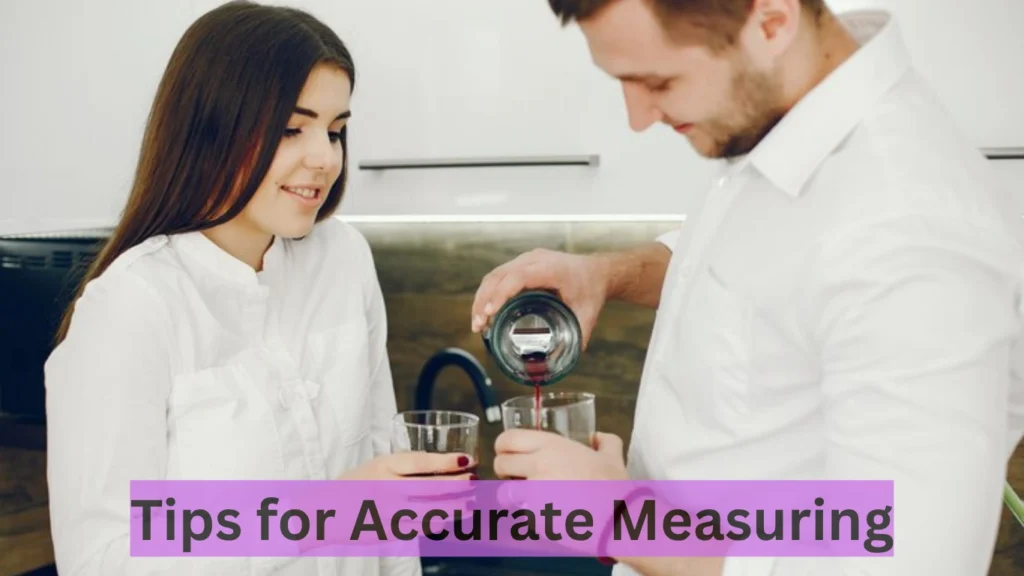
Accurate measuring can make or break a recipe — especially in baking. Here’s how to make sure your half of ¾ cup truly equals ⅜ cup.
1. Measure Dry and Wet Ingredients Differently
- Dry ingredients: use dry measuring cups, fill to the top, and level with a knife.
- Wet ingredients: use a liquid measuring jug, fill to the exact line, and check at eye level.
2. Don’t Pack Unless Told To
Some ingredients like brown sugar are meant to be packed tightly; others, like flour, should be lightly spooned and leveled.
3. Use a Scale When Possible
Digital kitchen scales remove guesswork. For example, half of ¾ cup flour = ~45–50 g — exact every time.
4. Avoid Overflow
Slight over-measuring can change texture or density, especially in baked goods.
5. Double-Check Rounded Values
Rounding to the nearest ml or gram is fine for cooking but not ideal for precision baking. Always confirm which cup system your recipe uses.
Why Correct Conversions Matter in Baking
Unlike cooking (which allows improvisation), baking depends on precise chemical reactions between ingredients.
Adding even 10 g more flour or 1 tbsp too much liquid can change the texture, rise, or crumb of your baked goods.
Using accurate conversions — especially when halving or doubling recipes — ensures consistency every time you bake.
Common Kitchen Conversions for Halving Recipes
When halving recipes, you’ll often encounter similar tricky measurements. Here’s a handy mini-chart:
| Original Amount | Half Amount |
|---|---|
| ½ cup | ¼ cup |
| ⅔ cup | ⅓ cup |
| ¾ cup | ⅜ cup (6 tbsp) |
| 1 cup | ½ cup |
| 1½ cups | ¾ cup |
| 2 cups | 1 cup |
You can bookmark this or print it out for your kitchen!
Measuring Different Ingredient Types
| Ingredient Type | Measuring Tip |
|---|---|
| Flour, sugar, cocoa | Spoon lightly into a dry cup and level with a knife. Don’t scoop directly. |
| Brown sugar | Pack firmly into the cup unless your recipe says otherwise. |
| Butter | Use tablespoon markings on the wrapper or melt and measure in a jug. |
| Liquids (milk, oil, water) | Measure in a liquid jug; check at eye level. |
| Sticky ingredients (honey, molasses) | Grease the cup/spoon lightly for easy release. |
Which “Cup” Should You Use?
Different countries measure cups differently.
If you’re following:
- American recipes → use US customary cups (236.588 ml)
- Canadian, UK, or Australian recipes → use metric cups (250 ml)
- Nutrition labels or packaged foods (US) → use legal cups (240 ml)
Whenever you convert a recipe, double-check which system is used to prevent accidental measurement errors.
Printable Quick Reference (Copy or Save)
| Conversion | Equivalent |
|---|---|
| Half of ¾ cup | ⅜ cup |
| Tablespoons | 6 tbsp |
| Fluid ounces | 3 fl oz |
| Milliliters (US) | 88.7 ml |
| Milliliters (Metric) | 93.8 ml |
| Grams (Flour) | 45–50 g |
| Grams (Sugar) | 75 g |
| Grams (Butter) | 85 g |
(You can also offer this as a downloadable PDF or printable kitchen chart on your site.)
FAQs
Q1: What is half of 3/4 cup in tablespoons?
A: 6 tablespoons. (There are 16 tbsp in one cup; ¾ × 16 = 12; half of 12 = 6.)
Q2: What is half of 3/4 cup in milliliters?
A: About 88.7 ml (US customary) or 93.8 ml (metric) — depending on which cup your recipe uses.
Q3: How can I measure 3/8 cup without a 3/8 cup measure?
A: Use 6 tablespoons, or ¼ cup + 2 tablespoons, or measure about 89 ml in a jug.
Q4: Is 3/8 cup the same as 1/4 cup + 2 tbsp?
A: Yes — they’re exactly equivalent.
Q5: Can I estimate 3/8 cup by eye?
A: Yes, but only for non-baking recipes. Fill a ¾-cup halfway for a quick visual estimate.
Q6: What’s the difference between US and metric cups?
A: US cups hold 236.588 ml, while metric cups hold 250 ml. That’s a 5–6% difference, which can affect baked goods.
Q7: What is half of 3/4 cup butter in sticks?
A: ¾ cup butter = 1½ sticks. Half of that = ¾ stick (or 6 tbsp).
Bonus: How to Halve Any Measurement
You can halve any recipe amount using this simple formula:
(Original cup measurement ÷ 2) = Half amount
| Common Amount | Half |
|---|---|
| ¼ cup | ⅛ cup (2 tbsp) |
| ⅓ cup | 2 tbsp + 2 tsp |
| ½ cup | ¼ cup |
| ⅔ cup | ⅓ cup |
| ¾ cup | ⅜ cup (6 tbsp) |
| 1 cup | ½ cup |
Save this formula to quickly adjust recipes — no calculator needed.
Sources & References
- Exploratorium – Kitchen Measurement Equivalents
- US FDA – Food Labeling and Nutrition: Legal Cup Definition (240 ml)
- Taste of Home – Baking Measurement Tips
- Traditional Metric and Imperial Conversion Standards
Conclusion
So, half of ¾ cup = ⅜ cup, which equals 6 tablespoons, 3 fluid ounces, or about 89 milliliters.
For the most accurate results, especially in baking:
- Use the correct cup system (US or metric).
- Level dry ingredients carefully.
- Convert to grams whenever possible for precision.
With this guide — plus the printable chart and measurement hacks — you’ll never be stumped by “half of ¾ cup” again!