
AI Exposmall: Why Small-Scale AI Expos Are Changing the Game
In a world where big tech events and sprawling conferences dominate the calendar, a new format is quietly gaining traction: the AI Exposmall. As artificial intelligence (AI) evolves rapidly, startups, SMEs, and niche verticals are looking for more focused, cost‑effective venues to showcase, learn, network and collaborate. This article explains what an AI Exposmall is, why it’s rising in importance, how it works, its benefits & challenges, vertical real‑world examples, a practical checklist for participants, and what the future holds.
What is an AI Exposmall?
Definition & Distinguishing Features
An AI Exposmall is a compact, niche exposition or conference focused on artificial intelligence (and often related technologies) with fewer exhibitors, narrower verticals, less overhead and a more intimate networking environment than large‑scale flagship events. Unlike massive global shows with thousands of booths and tens of thousands of attendees, an Exposmall typically provides:
- A smaller footprint (for example 20‑100 exhibitor booths rather than 500+).
- A focused theme (e.g., Gen‑AI for healthcare, AI in agriculture, startup track).
- Intensive networking, demo sessions, workshops rather than broad keynote‑only tracks.
- Lower cost for exhibitors and attendees, making it more accessible for early‑stage firms or regionally focused organisations.
How It Differs from Major AI/Tech Expos
Large AI/technology expos (for instance AI & Big Data Expo, which hosts multiple editions globally) attract thousands of attendees, feature massive exhibition floors and often focus on enterprise‑scale deployments. In contrast, the Exposmall format pivots toward agility, community, and targeted verticals. The difference can be summarised in this table:
| Feature | Large AI Expo | AI Exposmall |
|---|---|---|
| Number of exhibitors | Hundreds to thousands | Tens to low‑hundreds |
| Attendee scale | Often 5,000–10,000+ or more | Typically hundreds to a few thousand |
| Focus & theme | Broad (all industries, all AI topics) | Narrow (specific vertical, geography, startup size) |
| Cost (booth/attendance) | High – premium venues, global brands | Lower – regional venues, focused scope |
| Networking style | Large‑scale, sometimes impersonal | Intimate, high‑engagement, hands‑on |
| Ideal for | Large corporations, global brand launches | Startups, SMEs, regional innovation ecosystems |
This format is especially potent today because AI innovation is no longer confined to the Silicon Valley giants — it’s happening everywhere. As such, a tailored format like an Exposmall can be far more relevant for many participants.
The Rise of AI Exposmalls: Trend and Market Data
Statistics & Growth
While specific global statistics on “AI Exposmalls” are still emergent (given the nascent definition of the term), insight from the broader AI‑and‑events space offers clues:
- The “AI & Big Data Expo” 2025 edition drew between 7,000–8,000 attendees in each of its global editions
- Organisations such as National Science Foundation (NSF) are investing heavily in AI research infrastructure and showcasing at expo‑style forums.
- The need for smaller, more affordable, and accessible AI‑oriented events is underscored by analysts who note that businesses of all sizes (including SMBs) seek actionable AI tools, not just hype.
Though precise counts of “Exposmalls” aren’t tracked in mainstream databases yet, the trend is clear: as AI becomes democratized, the demand for accessible, vertical and regional forums is growing.
Why the Format Matters Today
Several market dynamics make the AI Exposmall format especially timely:
- Faster innovation cycles – AI development is moving at speed. Startups want to demo earlier, get feedback quicker, and avoid waiting for the next big annual conference.
- Cost pressures & ROI focus – Large events involve high budgets for travel, booths, and sponsorships. Smaller expos offer better cost‑to‑value ratios for emerging firms.
- Regional growth of AI ecosystems – Many regions (including South Asia, Southeast Asia, Africa, Eastern Europe) are building local AI hubs. A small‑scale expo resonates better locally than a mega‑event in another country.
- Verticalisation of AI – AI is no longer a monolith. It’s being applied in healthcare, agriculture, smart cities, Gen‑AI, IoT, edge computing. Specialist expos with clear vertical focus are increasingly relevant.
- Networking & meaningful engagement – Attendees value quality over quantity. Smaller events facilitate deeper conversations, better connections and more tangible take‑aways.
Format & Components of an AI Exposmall
Typical Agenda & Structure
An AI Exposmall typically follows a structure such as:
- Opening keynote: Often by a regional AI leader or industry expert
- Demo floor / exhibition booths: A curated set of companies/startups showcasing solutions
- Workshops / breakout sessions: Hands‑on or interactive sessions focusing on specific topics (e.g., “Using Gen‑AI in agritech”, “AI for edge computing in manufacturing”)
- Panel discussions / fireside chats: Experts from startups, investors, corporates share real‑life use‐cases and lessons
- Networking slots & match‑making: Scheduled sessions for attendees, exhibitors, investors to meet
- Closing summary / next‑steps: Often inviting participants to join follow‑up communities or regional meetups
Roles & Stakeholders
- Startups / exhibitors: Looking to demo tech, attract partners or investors
- Corporates & SMEs: Seeking practical AI solutions, vendors, innovation partners
- Investors & ecosystem players: Scouting early‑stage AI ventures, regional innovation
- Academic / research institutions: Sharing AI breakthroughs, connecting with industry
- Policy/regulators/local governments: Engaging with AI ecosystem, exploring regional AI development
Venue Types & Scale
Because of the smaller format, venues may vary: a hotel conference centre, a regional convention centre, a university campus, or even a hybrid/virtual model. The size might be:
- 1–2 days long
- 100‑500 attendees (regionally focused) or 500‑1500 (bigger yet still smaller than mega‑events)
- 20‑80 exhibitors
- 5‑10 workshop tracks rather than 20+ parallel tracks
This scalability allows the organisers to tailor costs and logistics to the target audience.
Key Benefits for Attendees, Exhibitors & Organisers
For Startups & Exhibitors
- Cost‑effective access to market: Lower booth and travel costs, high‑visibility in a concentrated field
- Focused audience: More relevant attendees (vertical/regionally aligned) rather than general crowd
- Networking opportunities: More meaningful conversations, less noise, easier to build relationships
- Faster feedback loops: Get direct feedback from potential customers or investors, quicker pivots, lower risk.
For Corporates / SMEs
- Discover practical solutions: Smaller expos often deliver actionable case‑studies and real world tech rather than hype‑heavy sessions
- Access to local innovation: Regional focus allows identification of cost‑effective solutions, local partners
- Flexibility & niche topics: Ability to attend sessions more aligned with the firm’s specific vertical rather than broad generic tracks.
For Organisers / Ecosystem Builders
- Lower overhead, faster turnaround: Smaller scale means quicker organisation, less risk, more agility
- Build regional brand & community: Focused event helps build a local ecosystem rather than a generic global one
- Sponsor & partnership attraction: For sponsors wanting targeted reach (e.g., “AI in agritech in Pakistan”), small expos give better ROI than huge generic shows.
Limitations & Challenges of the Exposmall Format
Exposure & Visibility Limitations
Because the event is smaller and less publicised than mega‑conferences, it may attract fewer attendees, less press coverage and fewer marquee brands. This may reduce the “buzz” factor. Sometimes exhibitors may worry about scale and return on investment.
Infrastructure & Venue Constraints
Smaller venues may lack the scale, show‑production value, or global reach of flagship events. For example, exhibitors used to high‑end booths and major venues might find setup more modest. Also, regional infrastructure (travel, lodging, connectivity) might be a factor in emerging markets.
Depth vs Scale Trade‐off
With fewer participants and tracks, you gain intimacy but may lose breadth. The risk is offering only a narrow view, limiting the number of parallel topics and thus the appeal for attendees who expect “everything AI”.
Sponsorship / Budget Challenges
Organisers may face funding constraints and struggle to secure large sponsors used to high traffic. Exhibitors may compare costs per lead with larger events and question ROI if not enough leads generate.
Perception & Prestige
Sometimes smaller events are perceived as “less serious” or “not as important” as the big global shows. Convincing attendees and exhibitors of the value proposition requires clarity and good case‑studies.
Use Cases & Vertical Examples
Example 1: Healthcare AI Exposmall
Imagine a 2‑day event in Bengaluru or Lahore focused solely on “AI in healthcare & diagnostics”. Startups showcase medical imaging AI, predictive analytics for clinics, remote‑care AI systems. Attendees include hospitals, diagnostic labs, healthtech investors, regulatory bodies. The format enables deep‑dive workshops on compliance (HIPAA/GDPR‑style), integration challenges, case‑studies from regional hospitals.
Example 2: Smart Cities / IoT & Edge AI Exposmall
Another scenario: a small expo in a smart‑city pilot region (e.g., a mid‑sized city in Pakistan or India) focusing on “Edge AI for Smart Infrastructure”. Exhibitors: edge‑AI hardware startups, local government projects, sensor networks, analytics providers. Attendees: city planners, infrastructure firms, regional governments, tech clubs. Because the scale is smaller, the event can be very hands‑on: field visits, live demos of street‑lighting AI, traffic‑AI prototypes etc.
Example 3: Gen‑AI Startup Showcase Exposmall
A one‑day “Gen‑AI Startup Expo” in a university incubator context where early‑stage AI startups (50 or so) demo chatbots, LLM‑applications, automation tools. Investors, mentors, corporates attend. The event emphasises networking and matchmaking rather than thousands of booths. Cheaper for startups, higher intimacy.
Regional Focus: South Asia / Pakistan
For audiences like yours (Pakistan, Saddiqabad‑Punjab region), there’s a major opportunity. A regional AI Exposmall focusing on “AI for SMEs in Pakistan / South Asia” can bring local startups, regional investors, domestic corporates, and government/academia together. Because the cost of participation is lower, SMEs and regional innovators can show up more easily and gain meaningful exposure. This regional format also minimises travel/logistics burdens for participants from smaller cities.
How to Get the Most from an AI Exposmall (Checklist)
For Startups / Exhibitors
- Define your goals clearly: Are you looking for leads, investors, partners, feedback, press?
- Prepare a compelling demo: Because scale is smaller, you can be more interactive and personal.
- Bring relevant collateral: one‑pagers, QR codes to your demo/app, business cards with LinkedIn links.
- Book multiple meetings ahead of time: With fewer attendees, scheduling ahead ensures higher engagement.
- Train your team: Be ready to do quick talks (1‑2 minutes) and deeper demos (10‑15 minutes) depending on visitor interest.
- Follow up after the event: Capture leads, send personalised follow‑up e‑mails within 24‑48 h, reference the meeting.
For Attendees (Corporates/SMEs)
- Pre‑plan sessions: The smaller format means fewer parallel tracks — pick what’s most relevant.
- Approach exhibitors with questions: What problem are you solving? What’s your deployment story?
- Attend networking slots: Small events are ideal for meaningful conversations, so allocate time.
- Take notes & follow up: Get business cards, ask for demos, schedule follow‑ups.
- Bring an open mind: Explore startups, research groups, unconventional ideas that would not surface in large expos.
For Organisers
- Clarify your value‑proposition: What makes this Exposmall unique? What vertical / regional niche do you serve?
- Curate exhibitors & content carefully: Because scale is smaller, the quality and alignment matter a lot.
- Offer matchmaking/networking features: e.g., pre‑event “pitch‑tables”, “meet‑the‑investor” sessions, structured one‑on‑one meetings.
- Document results and follow‑through: Share case studies from previous editions to build credibility.
- Use hybrid/virtual components if possible: This increases reach beyond the physical attendees and adds flexibility.
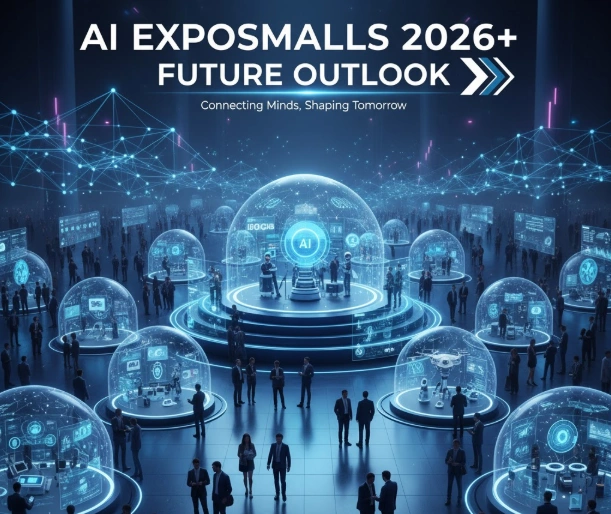
Future Outlook: What’s Next for AI Exposmalls in 2026+
Hybrid & Virtual Formats
While physical meet‑ups remain valuable, the trend toward hybrid or even fully virtual “small expo” formats is growing. Regional participants, remote demos, virtual networking lounges — all reduce cost and broaden reach. Especially for regional markets where travel/lodging may be a barrier.
Regional Expansion & Localisation
Expect more Exposmalls tailored to regions outside the US/EU: South Asia (Pakistan, India, Bangladesh), Africa, Latin America. These will focus on local problems, solutions and ecosystems rather than generic global AI themes. Your region has significant opportunity here.
Vertical‑First Spin‑Offs
As AI becomes increasingly embedded, we will see specialist Exposmalls like “AI for Agritech”, “AI for MSMEs”, “AI for Emerging Markets”, “AI for Education & EdTech”. These will be even smaller, yet high‑value. Because they speak directly to a specific industry sector.
Startups as Event Drivers
Rather than big brands dominating exhibition floors, we’ll see startup‑driven Exposmalls where innovation ecosystem players (incubators, VCs, accelerators) drive the agenda. They’ll use the expo format as a launchpad for spin‑outs, pilot programmes, investment rounds.
ROI & Data‑Driven Metrics
Participants (exhibitors & attendees) will demand clearer metrics: number of leads, meetings held, demo feedback, post‑event conversions. Organisers who deliver measurable ROI will stand out. Smaller events are better suited to delivering such metrics because the scale is manageable.
Helpful Resources & Links
- See upcoming large‑scale AI event details at the AI & Big Data Expo website.
- For startups and SMBs seeking AI‑event recommendations, see this guide from Salesforce.
- If you are in research or academia, the NSF’s participation in an AI‑expo‑format gives insight into how government anchors such events.
FAQs
Q: How long does an AI Exposmall typically last?
A: Usually 1–2 days for smaller regional events; 2–3 days might be used for slightly larger ones with workshops and networking dinners
Q: What is the typical cost to exhibit?
A: Costs vary widely based on region, venue, number of attendees and sponsor level — but compared to major global events (where booths may cost tens of thousands USD), Exposmalls may offer exhibitor spaces for a few thousand USD (or equivalent local currency) plus travel/hotel.
Q: Are virtual or hybrid versions available?
A: Yes — many organisers are now offering hybrid attendance (physical + virtual) or even fully virtual versions to increase reach and lower attendee costs.
Q: What kind of companies should attend?
A: Startups, SMEs, innovation units of larger firms, regional governments, academic labs, investors focusing on early‑stage AI. Also corporates seeking cost‑effective access to innovation.
Conclusion
The AI Exposmall represents a compelling evolution of the exhibition‑model in the age of rapid, decentralised AI innovation. By providing a focused, cost‑effective, networking‑rich venue, it offers tangible value for startups, regional players and niche verticals. While large AI expos will continue to serve global enterprise‑scale audiences, the Exposmall format is emerging as the strategic choice for those who want to move fast, connect directly, and derive ROI rather than simply attend a large conference.
If you’re considering attending, exhibiting or organising in the next 12 months, it’s worth exploring how this format fits your goals: be clear on your objectives, prepare accordingly, and leverage the unique opportunities a smaller format offers. In many ways, the future of AI events might not always be “bigger” — sometimes, smarter and smaller wins.